www.triptotemples.com | India’s No. 1 Kailash Yatra Agency
Top Kailash Yatra Packages


Karnataka Bans Single-Use Plastic at Muzrai Temples from August 15
Published : 12-Jun-2025 05:12:15 PM
Share This News :
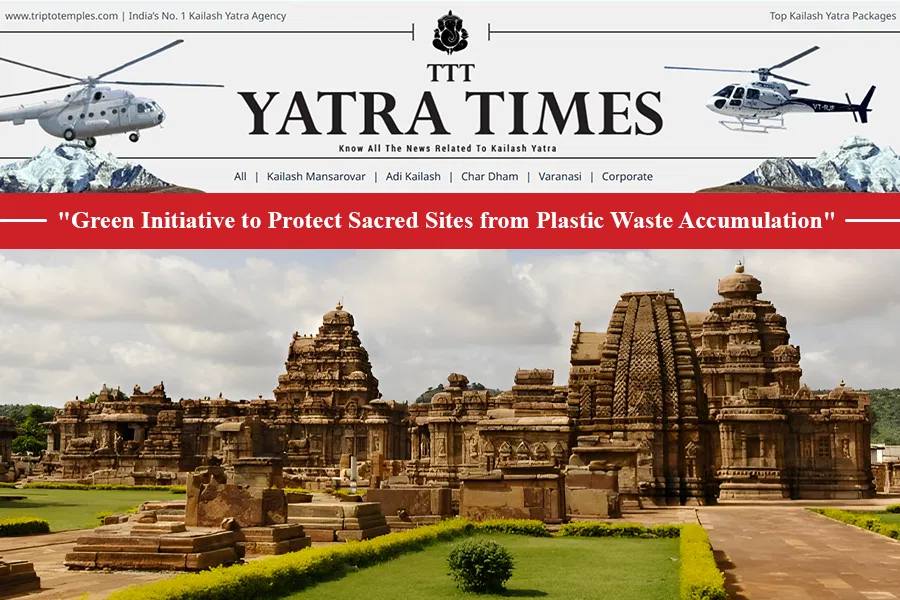
In a significant environmental initiative, the Karnataka government has announced a comprehensive ban on single-use plastic at all Muzrai temples across the state, effective from August 15, 2025. The decision comes as religious institutions face mounting challenges from plastic waste accumulation through prasad sachets, plastic bottles, and packaging materials.
Karnataka Minister for Religious Endowment Ramalinga Reddy declared on Sunday that the ban on plastic use measure will apply to all temples under the Muzrai Department’s jurisdiction. The environmental protection initiative specifically targets water bottles, plastic covers for prasads, and plastic packaging for kumkums and other religious offerings.
“All temples under Muzrai administration will be prohibited from using single-use plastic materials within their premises from August 15,” Reddy stated, emphasizing the government’s commitment to environmental conservation at sacred sites.
The Muzrai system derives from the Persian word “Mujra,” meaning deduction or allocation, traditionally referring to allowances granted for religious or charitable purposes. The Muzrai Department oversees the administration of revenues and operations of religious and charitable institutions belonging to Hindus and Muslims, including temples, mutts, durgas, feeding houses, and masjids. According to official records, Karnataka news sources indicate that over 34,000 temples operate under Muzrai jurisdiction. These institutions are categorized based on revenue generation: Category A temples generate substantial revenue, Category B temples produce moderate income, while Category C temples generate minimal or no revenue.
The ban plastic policy provides temples with a two-month transition period to dispose of existing plastic inventory. Temple authorities must eliminate all single-use plastic materials from their premises by August 15th, as per a given timeline.
Concurrent with the plastic ban announcement, Minister Reddy directed officials to complete comprehensive documentation of temple properties. Officials have been tasked with providing detailed information about all temples with associated lands within three months and completing the documentation process for approximately 20,000 acres of temple-owned land. “Temples lacking proper documentation must complete this process within the three-month timeframe,” Reddy emphasized, highlighting the dual focus on environmental protection and administrative transparency.
This green initiative aligns with national environmental protection efforts, particularly as India observes World Environment Day with the theme “Beat Plastic Pollution.” The government’s commitment to reducing plastic consumption extends beyond religious institutions, reflecting a comprehensive approach to environmental conservation.
The initiative coincides with other significant environmental developments across India. Delhi has announced plans to establish the country’s first electronic waste eco park in North Delhi’s Holambi Kalan area, promoting technological competence and green opportunities in waste management.
Environmental challenges continue to affect coastal regions, with Chennai’s shores recently experiencing severe pollution from nurdles, small plastic pieces that constitute a major source of microplastics in oceans. The pollution, resulting from a sunken cargo ship carrying 640 containers of hazardous materials, poses significant threats to marine life and coral reefs in the Gulf of Mannar, including the recently declared Dhanushkodi Greater Flamingo Sanctuary.
The ban on single-use plastic at Karnataka’s Muzrai temples represents a pioneering effort among Indian states to address environmental concerns at religious sites. With thousands of devotees visiting these temples daily, the environmental initiative is expected to significantly reduce plastic waste generation and promote sustainable practices in religious observances. Furthermore, a comprehensive approach combining environmental protection with administrative reforms demonstrates the state government’s commitment to preserving both cultural heritage and environmental integrity at these sacred sites.
Share This News :
Popular Videos
#IAmShravanKumar
Reach out to us
Have An Enquiry? Write To Us…
Popular Pilgrimage Packages
We Got Featured in the Media















What Yatris Talk About Us

Trip To Temples
India’s No. 1 pilgrimage travel planner with a decade of expertise. We are the one who started the Kailash Aerial Darshan package. Guided by "Har Safar, Bharose Par," we craft safe, comfortable, and spiritually enriching journeys to Kailash Mansarovar, Char Dham, Adi Kailash, Nepal and beyond.
Tour Resources
Trip To Temples Packages
Popular Destinations
Download The App


© 2026 Trip To Temples. All Rights Reserved.
Design & Developed By : Divine Mantra Pvt Ltd